Historically, active shooter and targeted violence incidents across public spaces, including higher education campuses, were widely viewed as unpredictable and firmly outside the normal scope of institutional risk planning. Yet, the environment in which such incidents occur and the consequences that follow present an altered and expanded set of risks compared to 10 years ago. Now, atop the pain of human loss and injury, an institution that suffers a shooting can expect to face years of litigation exposure, scrutiny, and reputational damage. The impact of a single incident now reverberates far beyond the campus and primary stakeholders, producing longstanding fallout.
Rising Violence
According to current Gun Violence Archive (GVA)1 data, the number of gunshot victims on college campuses increased by 200% from 2016 to 2025. Over the same period, known campus shootings rose nearly 70%. Even when such incidents remain statistically infrequent relative to the size of the higher education sector, the upward trend objectively demonstrates escalating risk.
Courts and prosecutors now examine whether individuals and organizations exercised reasonable diligence to anticipate or mitigate armed violence as a foreseeable threat.
Climbing rates of campus violence are one of the primary drivers of legal and regulatory evolution in the public violence environment. Courts and prosecutors now examine whether individuals and organizations exercised reasonable diligence to anticipate or mitigate armed violence as a foreseeable threat. While this does not suggest institutions must be capable of stopping each and every act of violence, it clearly shows that expectations regarding the duty of care have expanded.
The relevant question for institutional leadership is not whether violent risk can be anticipated on campus, but whether a school can demonstrate that it took meaningful steps to reduce the time between threat identification and action.
The Erosion of Unforeseeability
University risk managers contend with a wide range of enterprise risks, including cybersecurity, financial volatility, reputational risk, and enrollment pressures. However, violent threat risk often remains adjacent or downstream of these discussions rather than integrated into them. Responsibility for preparing for, preventing, and managing campus violence historically rested with campus security, which can unintentionally frame targeted violence as a localized operational issue rather than an enterprise-wide risk.
New legal developments are beginning to challenge that distinction. Litigation following high-profile shootings2 across industries questions whether organizations exercised reasonable diligence in anticipating or mitigating threats. In some cases, legal arguments cite emerging security technologies, such as visual AI weapons detection3, as examples of measures an enterprise might reasonably have procured to improve readiness and response time. No court has established definitive standards surrounding such a class of technologies. Still, the mere appearance of these arguments in litigation reflects a broader shift in how violent risk is considered.
Assuming a Proactive Stance
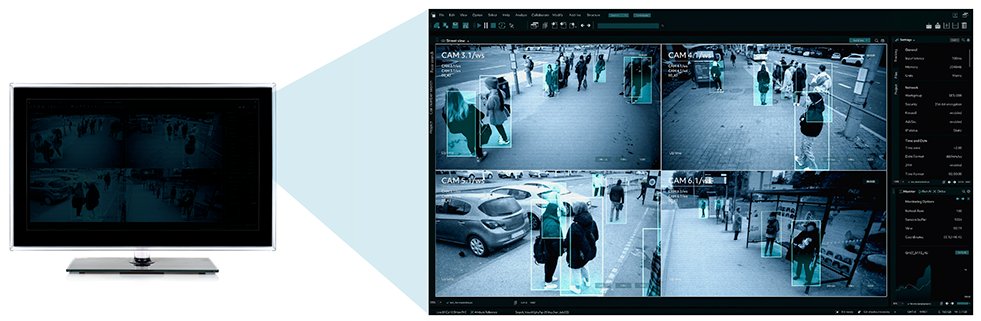
Cameras, access control systems, emergency notification platforms, and trained security personnel all play proven response roles in institutional preparedness. However, most camera systems have historically functioned as reactive monitoring tools, recording events for investigators to review post-incident. Advances in artificial intelligence and video analytics are changing that to a proactive model.
Even modest reductions in detection time can drastically alter the trajectory of a violent incident.
Visual AI detection enables institutions to convert existing camera infrastructure into advanced systems capable of identifying threats in real time. One emerging application is visual firearm detection, in which AI models analyze camera feeds to identify the presence of a brandished weapon and generate immediate alerts for trained analysts. By combining automated analytics and trained human monitoring, real-time threat alerts are rapidly delivered to campus security and operations centers as well as first responders. The significance of this capability lies less in the raw technology than in the capture of critical time. Every second salvaged by trained analysts can provide front-line security and law enforcement with intelligence that expedites critical decision-making and forces an assailant to react to first responders rather than the other way around. Even modest reductions in detection time can drastically alter the trajectory of a violent incident.
Proactive Crisis Management
Insurance has long played a leading role in helping institutions recover from violent incidents. However, about 10 years ago, arising out of the long tail trauma of Columbine4 and the subsequent inflation of risk, specific active assailant coverage emerged to address the legal, human, and financial complexity of claims related to mass shootings. Policy silence and gaps, policy-definition debates, and the need for both scale and expertise to support institutions in the wake of such tragedies demonstrated a need for a new coverage canvas.
Specialized violence and active-assailant insurance programs are increasingly being used to strengthen crisis management capabilities alongside financial protection. Some active assailant policies5 include access to crisis response consultants during the coverage period who can advise on threat assessment, preparedness planning, and security vulnerabilities prior to any incident. Such a framework shifts coverage from an indemnity backstop to a critical front-line, proactive layer. Additionally, carriers and reinsurers6 are also building and deploying turnkey solutions to further develop the framework and normalize this critical line. Emerging insurance/physical security partnerships are also exploring mechanisms to deliver rapid parametric support following violent incidents, helping institutions stabilize operations while longer recovery processes unfold.
These developments indicate that risk transfer is still evolving, moving beyond a purely indemnity-based model toward integrated, proactive cooperation among insured, insurers, and physical security. As with any other enterprise risk, effective management depends on balanced risk reduction and transfer, crisis preparedness, and financial resilience. For higher education leaders, the implications are increasingly clear: Can an institution demonstrate to stakeholders that it took reasonable, proactive steps to prepare for armed violence on a campus? As expectations around the duty of care increase, preparedness is becoming as much a governance and risk management issue as a security concern.
BOTTOM LINE
Violent threat risk is increasingly understood as a foreseeable enterprise-wide risk, requiring governance attention alongside other high-severity institutional exposures.
Visual AI threat detection systems are designed to identify weapons or armed individuals earlier than traditional monitoring, potentially allowing security personnel more response time.
Standard liability insurance policies may be inadequate for the financial and operational costs that follow violent incidents.
https://www.gunviolencearchive.org/
https://www.facilitiesdive.com/news/shooting-victims-widow-sues-345-park-ave-nfl-forlax-security/810171/
https://zeroeyes.com/
https://www.jeffco.us/3832/Columbine-Records
https://www.beazley.com/en-US/products/political-violence-deadly-weapons-protectionusa/political-violence-deadly-weapons-protection/
https://www.berkleyre.com/solutions/wp-content/uploads/sites/7/2023/03/WVOverview-PDF-3-1-A.pdf