Managing payments in higher education can feel like running a small city. Today’s campuses include various merchants, numerous payment points, and multiple methods and channels through which money moves. From dining halls and athletic departments to student groups, campus clubs, and special events, the type and frequency of payments present a unique challenge for ensuring compliance with Payment Card Industry (PCI) standards.
This diverse payment ecosystem means that payment risks aren’t confined to a single area of campus, but are dispersed across multiple touchpoints. Further, the frequency of these transactions makes managing compliance complex. Evaluating risk at every point where money flows is no longer optional; it’s a requirement. Understanding PCI compliance helps avoid fines, prevent data breaches, and reduce reputational risk.
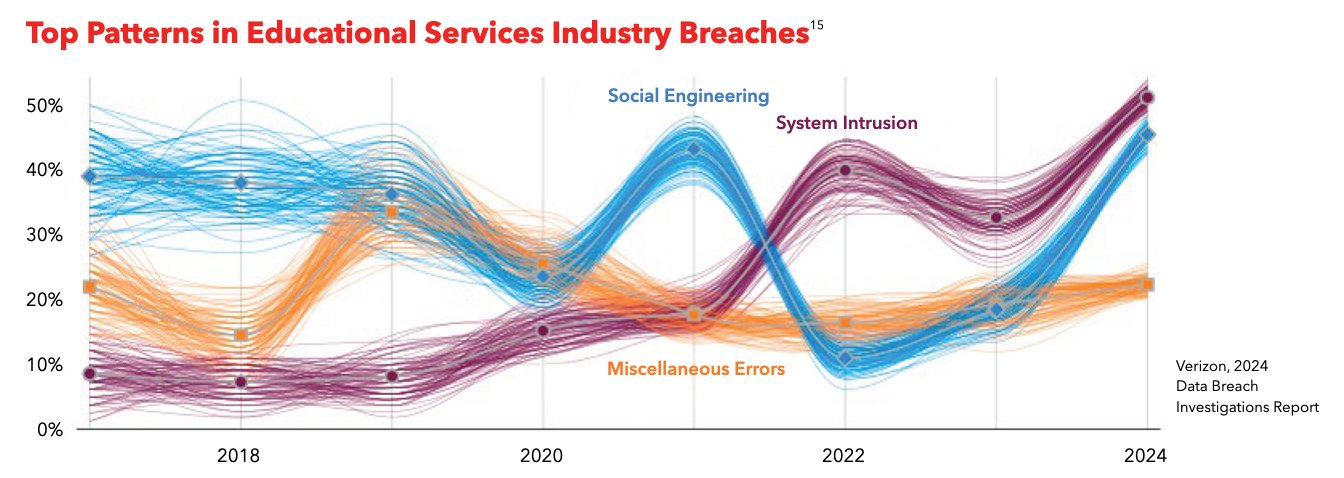
"The Verizon 2024 Data Breach Investigations Report showed that higher education suffered breaches that included 1,780 incidents and 1,537 with confirmed data disclosure. System Intrusion, Social Engineering & Miscellaneous Errors made up 90% of breaches with motives being Financial (98%) and Espionage (2%)."

What is PCI Compliance?
The Payment Card Industry created the Payment Card Industry Security Standards Council (PCI SSC) to establish and enforce security standards for payment card transactions. Their intent was to safeguard sensitive cardholder data and mitigate fraud risks. PCI compliance is not optional. Any institution, or “merchant,” that processes, stores, or transmits credit or debit card data is required to meet PCI standards.
The importance of compliance cannot be underscored, as failure to comply can result in severe penalties and increased security risks.
PCI Compliance: A Campus-wide Initiative
Ensuring PCI compliance is no longer the responsibility of a single department. It requires a campus-wide approach to effectively secure payment systems. Many campuses establish cross-functional committees that include stakeholders from the business office, data privacy, risk management, and IT security to help drive a comprehensive strategy to enhance compliance and mitigate legal and compliance risk.
Remember, the institution is the "merchant of record," which means it is ultimately responsible for ensuring PCI compliance, regardless if third-party vendors are utilized in payment processing. Universities must oversee not only their internal operations but also the payment systems and practices of any external vendors that handle cardholder data. Following are practical steps to help navigate PCI compliance across campus.
Step 1: Defining the Cardholder Data Environment (CDE)
The first step in ensuring PCI compliance is understanding and defining your CDE. This includes anywhere a transaction takes place, whether in person, online, over the phone, or via a mobile device. By identifying all locations and methods where cardholder data is stored, processed, or transmitted, institutions can assess risk and develop strategies to reduce exposure.
Step 2: Reducing the CDE Footprint
A best practice is to reduce the CDE footprint by implementing a unified payment system across campus. A streamlined payment system can significantly reduce the risk of breaches and simplify the compliance process. When a unified system is in place, institutions may only need to complete a single Self-Assessment Questionnaire (SAQ) rather than multiple, thus minimizing administrative burden and reducing the risk of non-compliance.
Step 3: Identifying and Vetting Vendors
Colleges and universities often rely on third-party vendors to manage payment systems which could lead to increased risks. It is essential that these vendors meet the necessary compliance requirements to protect cardholder data, including providing PCI Attestation of Compliance (AoC) documentation. While a vendor’s System and Organization Controls (SOC) report is not required to comply with PCI, it is a best practice to also require this for vendors handling large volumes of sensitive data or involved in payment processing. Strong contract language with vendors is also key to mitigating risks. It is imperative to ensure indemnification and Limitations of Liability are addressed comprehensively.
To effectively manage vendor compliance, a best practice is to store compliance documentation in a centralized location that is accessible to key departments across campus. This ensures that all parties are aware of the vendor's compliance status and can make informed decisions regarding the risk associated with their payment solutions.
From an insurance standpoint, while cyber liability insurance provides the university with coverage for assessments, fines, or penalties imposed by banks or credit card companies due to non-compliance with PCI, a university’s goal should be to preserve their limits of insurance by having a robust PCI compliance program.
Step 4: Annual Assessments and Training
PCI compliance is not a one-time effort. Annual risk assessments and ongoing training are integral to maintaining compliance. Institutions should also conduct regular self-assessments to evaluate their PCI status and identify areas for improvement.
In addition to assessments, annual training for staff involved in payment processes is essential. Employees must understand PCI requirements, and their role in protecting payment data is crucial to mitigating compliance risk. Institutions can bolster compliance awareness by attending PCI conferences, participating in webinars, or adopting a "train the trainer" approach to enhance institutional expertise and foster a culture of security where everyone is encouraged to put on their risk management hat!
Step 5: Navigating the PCI DSS v4.0 Update
As of March 31, 2025, the PCI DSS v4.0 requirements were fully implemented, bringing with them significant changes. This update includes more than 50 new requirements, which will apply to all merchants, including higher education institutions. Additionally, the Self-Assessment Questionnaire format has been updated to reflect these changes, and institutions must adjust their compliance processes accordingly.
You can stay informed about these updates through the PCI Security Standards Council’s resource hub16 which offers valuable information for understanding the new requirements.
CONCLUSION: A PROACTIVE APPROACH TO CAMPUS PAYMENT SECURITY
Maintaining PCI compliance is not just about meeting standards; it's about safeguarding your institution's reputation and reducing the risk of costly data breaches. With payments occurring across hundreds of touchpoints on campus, managing compliance can be a challenge. However, by adopting a proactive, cross-functional approach which includes regular risk assessments, training, enhanced vendor oversight, and centralized systems, institutions can better navigate this complex landscape and foster a more secure payment environment for their students, staff, and visitors.

15Verizon 2024 Data Breach Investigations Report: http://verizon.com/dbir
16https://blog.pcisecuritystandards.org/pci-dss-v4-0-resource-hub