By Dr. Nance Roy
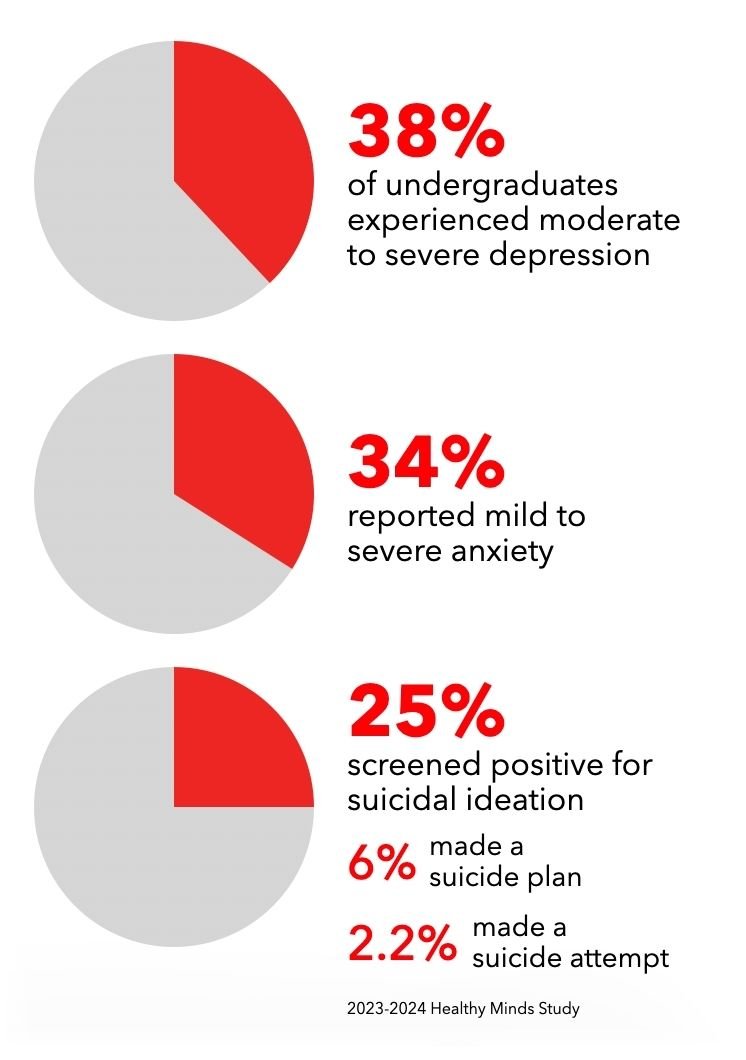
Over the past decade, mental health challenges among college students have been well documented and continue to be a growing concern. Data from the 2023-2024 Healthy Minds Study revealed that 38% of undergraduates experienced moderate to severe depression, 34% reported mild to severe anxiety, 25% screened positive for suicidal ideation, 6% made a suicide plan, and 2.2% made a suicide attempt, with suicide being the second leading cause of death.
For students, their school community is a critical part of their support network and emotional safety net. When considering how best to protect the mental health of college students, it is important to remember that while college life can be exciting, it is not without stressors. Increased academic pressures, social adjustments, financial stress, and navigating the challenges that accompany increased independence can contribute to feelings of isolation, loneliness, anxiety, and depression. In severe cases, this can lead to self-destructive behaviors or suicide.
These risks not only impact students, but they also can pose significant risk to the academic institution. Institutional risk may take the form of decreased retention rates, possible liability if a student’s mental health leads to self-injury, suicide, or a threat to the campus community. An institution’s reputation may also be damaged if it failed to provide adequate support for students’ mental health or failed to intervene appropriately when a student is in crisis.
The Jed Foundation's Comprehensive Approach

The Jed Foundation (JED), the nation’s leading non-profit organization that protects emotional health and prevents suicide for teens and young adults, works directly with colleges, school districts, and high schools to put systems, programs, and policies in place to create a culture of caring that promotes student mental health and reduces risks for suicide.
In addition to working directly with schools, The Jed Foundation has partnered with United Educators, which offers liability insurance to colleges and universities to provide resources that promote mental health awareness and prevention. As part of that partnership, United Educators offers schools that work with JED a discount on their insurance premiums, reinforcing the message that protecting college students’ mental health is an important step in mitigating risk on campus.

JED’s Comprehensive Approach is grounded in the belief that promoting student mental health is a campus-wide responsibility and includes strategic domains that should be addressed in any community-wide effort to support mental health and reduce suicide. There are tactical activities within each strategic area (outlined below) that risk managers can promote to assist schools in supporting student well-being.
Risk Managers as Partners
As risk management becomes more of an enterprise discipline, risk managers can play an important role in mitigating the risk of student mental health challenges. Risk managers, as strategic partners, can help drive a comprehensive, cross-functional approach while positioning themselves as champions for student mental health initiatives across the institution.
Develop a Strategic Plan
Risk managers can be integral in promoting and developing a plan that addresses all aspects of student mental health, including prevention, early intervention, and crisis response. Such a plan makes clear that supporting student mental health is a campus-wide responsibility.
Identifying Students at Risk
Risk managers can help identify and implement targeted training programs for faculty, staff, and students on how to recognize when a student may be struggling, how to reach out and offer support, and how to know when and where to refer to professional help. Identifying early signs of struggle and offering early support can often avert a mental health struggle from becoming a crisis. Establishing centralized systems for faculty, staff, and students to report students of concern also allows the institution to effectively reach out to support students who may be struggling.
Risk managers can also help establish a care team that includes appropriate staff to review reports of students of concern, evaluate risk, and create an appropriate plan for outreach. This cross-functional approach enhances institutional responsiveness and mitigates risk through early identification and coordinated action.
Develop Crisis Response Procedures
Risk managers can partner with appropriate professionals on campus to develop clear protocols for responding to mental health crises, including training staff on how to de-escalate situations, responding to a death on campus, ensuring access to emergency services, and ensuring that medical leave and return-from-leave policies best support students when they need time away from campus to attend to their well-being.
Promote Means Safety
Risk managers can conduct annual environmental scans to identify potentially dangerous areas on campus where students could bring harm to themselves and implement strategies to reduce access. In addition, implementing measures to restrict access to potentially lethal means such as securing potentially dangerous chemicals or medications, as well as securing firearms if allowed on campus, is essential.
Be an Advocate for Providing Mental Health and Substance Abuse Services
Risk managers can advocate for readily available and accessible counseling services on and/or off campus that include triage systems, afterhours support, and access to teletherapy options if available.
Increase Help-Seeking
Risk managers can play a crucial role in providing clear information about campus support resources to all students and their families/caregivers. They can further support educational campaigns to decrease stigma surrounding mental health.
Promote Social Connectedness
Risk managers can recommend to executive leadership that there be adequate places on campus for students to gather organically, and support campus events and activities that promote social interaction and help to develop a sense of belonging.
Good Data Is Essential
Risk managers can conduct an analysis of student mental health trends, track mental health incidents, and utilize this data to help identify patterns and inform interventions.
BOTTOM LINE

As college students’ mental health continues to be a significant concern, colleges and universities have a responsibility to ensure that there are effective policies, programs, and systems in place to support them. Risk managers are key partners in helping to lead a comprehensive approach to promote student well-being, which not only serves to mitigate risk but creates a campus culture where all students can thrive.