A department head pastes budget projections into ChatGPT to “summarize this for the board.” A financial aid officer feeds student records into an unapproved chatbot. Neither believes they are making a technology decision, but both are.
Why it matters: AI has changed what it means to manage risk. Admissions offices use predictive analytics. Financial aid platforms run machine learning. Employees across every department use ChatGPT, Microsoft Copilot, and Google Gemini daily. Every leader who touches data, approves a vendor, or adopts a new tool is now making technology decisions with institutional consequences.
AI Is Simpler Than You Think
AI is software that learns from data. You feed it information, and it finds patterns and uses them to generate content or predict outcomes. Think of it as a tool that learns from whatever you give it.
That means AI is only as safe as the data it consumes. Every interaction is a data governance decision, whether the person using it realizes it or not.
The Mosaic Effect
In my graduate program, our program director, Brian Kellogg, introduced us to the mosaic theory from intelligence analysis: individual data points appear harmless alone, but when aggregated, they reveal sensitive insights. The intelligence community has warned about this for decades. AI has turned every employee into an unwitting intelligence collector.
A budget line item means little by itself. However, combine it with an org chart, a vendor contract, and a strategic plan, all pasted into the same AI tool over weeks, and it becomes an organizational intelligence profile. No single person intended to create it. The AI assembled it from fragments.
By the numbers: Research from 2025 found that 18% of enterprise employees paste data into AI tools, and more than half of those events contain sensitive information. The average among those users is nearly seven paste events per day.
AI assistants built into everyday workplace tools like email, documents, and spreadsheets compound this risk. When an AI assistant inherits whatever access a user already has across an enterprise environment, it can surface confidential records at scale. A 2025 data risk report found that one such tool accessed nearly 3,000,000 confidential records per organization in six months. The U.S. House of Representatives banned its staff from using it over data security concerns. If Congress considers it too risky for legislative aides, every board should be asking what their own exposure looks like.
Engineers at a major technology company accidentally leaked proprietary source code by pasting it into ChatGPT, prompting a company-wide ban. In environments where FERPA-protected records, research data, and donor information flow through offices daily, the exposure surface is enormous.
Five Questions Before Using AI
Where does my data go after I submit it? Could it train future models?
Is this tool approved by IT and security? Shadow AI is one of the fastest-growing risk vectors in any organization.
Could this input contain protected or proprietary data? If you would not email it to a stranger, do not paste it into AI.
What is the vendor’s data retention policy? Free tiers often use your inputs for training.
Can I explain how this tool works? If not, you are not ready to deploy it.
A View from Both Sides
I write from a dual vantage point: completing a Master’s in Cybersecurity while managing security compliance programs. I deal with these challenges daily, in real time, from both sides of the desk.
The instinct to save time is understandable. The awareness of what is being surrendered is almost entirely absent.”
As a student, I’ve watched classmates paste research drafts, proprietary datasets, and project files into AI tools without thinking about where that data goes, especially during my business studies. The instinct to save time is understandable. The awareness of what is being surrendered is almost entirely absent.
As a professional, I see the downstream consequences: regulatory exposure, compliance gaps, and institutional risk that accumulates one careless paste at a time. The gap between AI adoption and AI understanding is not shrinking. It is actively widening.
Emerging Risks to Watch
AI-generated phishing is producing attacks that are personalized, flawless, and targeted by role. Shadow AI creates blind spots that security teams cannot see. Over-reliance on AI outputs introduces decision risk when summaries contain hallucinated data that looks authoritative. And the EU AI Act now classifies AI used in admissions and student assessment as “high-risk,” requiring bias testing and full auditability.
What Leaders Should Do Now
Define roles clearly. If leadership cannot explain AI tools to the board in plain language, the organization is deploying technology it does not understand.
Establish AI-acceptable use policies. Only 39% of institutions had one as of 2025. Every organization needs a two-tier policy: what is approved for sensitive data and what is not.
Audit before you activate. Tools like Copilot inherit existing file permissions. If your environment has years of overshared files, AI will surface all of them. Fix the permissions first.
Look inward. The biggest AI risk is not an external attack. It is well-intentioned employees pasting sensitive data into tools the organization does not control.
Bottom Line
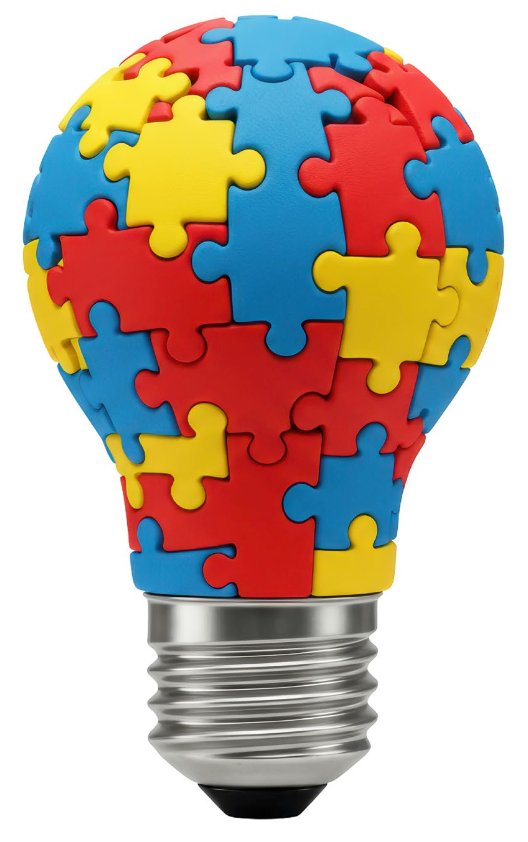
Every AI interaction is a tile in a mosaic: individually harmless yet collectively revealing. Boards and executives do not need to become technologists. But they do need to understand that every manager in their organization is now, by default, a technology manager. The question is not whether the institution is building a mosaic. It is whether anyone is paying attention to the picture it reveals.
The biggest AI risk is not an external attack. It is well-intentioned employees pasting sensitive data into tools the organization does not control.
Disclaimer: The views and opinions expressed in this article are those of the author in a personal capacity and are intended for general informational purposes only. They do not reflect the experiences, positions, or official policies of the author’s institutions or any affiliated organization.
LayerX Security, “Enterprise GenAI Security Report 2025.” Data on 18% paste rate and sensitive data exposure.
https://layerxsecurity.com/blog/layerxs-enterprise-genai-security-report-2025-exposinghidden-ai-security-blind-spots/
Concentric AI, “2025 Data Risk Report.” Copilot accessed nearly 3 million confidential records per organization.
https://www.techradar.com/pro/microsoft-copilot-has-access-to-three-million-sensitivedata-records-per-organization-wide-ranging-ai-survey-finds-heres-why-it-matters
Concentric AI, “2026 Microsoft Copilot Security Concerns Explained.” U.S. House ban on Copilot, oversharing data.
https://concentric.ai/too-much-access-microsoft-copilot-data-risks-explained/
Cyberhaven Labs / UpGuard, “Samsung ChatGPT Data Leak.” Samsung engineers leaked source code via ChatGPT.
https://www.cyberhaven.com/blog/4-2-of-workers-have-pasted-company-data-into-chatgpt
EDUCAUSE, “2025 AI Landscape Study.” 80% faculty/staff using AI; fewer than 25% aware of policy; 9% confident in cybersecurity policies; 39% with AI AUPs.
https://www.umass.edu/ideas/digest/ai-wake-call-universities-key-insights2025-educause-survey
The Education Magazine, “AI Governance in Higher Education: The 2026 Framework.” EU AI Act high-risk classification for admissions and assessment AI.
https://www.theeducationmagazine.com/ai-governance-in-higher-education/
Wikipedia, “Mosaic Effect.” Overview of mosaic theory in intelligence analysis and data aggregation risk.
https://en.wikipedia.org/wiki/Mosaic_effect