Financial pressures continue to rise at an unprecedented rate in higher education. Declining enrollment, driven by the 2025 demographic cliff, reductions in research and government funding, and inflation, has further exacerbated these challenges. As a result, financial pressures consistently rank among the top risks identified by risk management professionals across both public and private institutions.
One of the most significant contributors to financial risk is the growing backlog of deferred maintenance. This issue has consistently appeared in United Educators’ Annual Top Risk Report, ranking sixth in both 2023 and 2024 and eighth in 2022. The cost of deferred maintenance can be staggering, and it grows each year as projects are delayed and additional needs emerge. Institutions are now at a crossroads, and they must determine how to address this escalating risk amid competing priorities.
Bringing Visibility to the Risks
From an enterprise risk management (ERM) standpoint, deferred maintenance touches every major risk category: financial, operational, strategic, compliance, and reputational. Recognizing its institution-wide impact can help risk leaders elevate the importance of this issue in conversations with executive leadership and governing boards.
For institutions with mature ERM programs, one of the most effective strategies is to highlight the broad implications of deferred maintenance across all areas of the university. The risks of inaction tend to be underestimated outside of facilities and finance, making cross-functional awareness and communication essential.
For tuition-dependent institutions, deferred maintenance is inextricably linked to enrollment. The condition of facilities, including residence halls, classrooms, dining areas, and recreation spaces, can directly influence prospective students and their families. Benchmarking campus facilities against peer institutions and connecting these comparisons to enrollment trends can help make the case for increased investment. Risk managers can play a pivotal role in fostering collaboration between facilities, admissions, advancement, and finance so all stakeholders understand the shared impact of deferred maintenance.
Strategic Risks
A critical question for all institutions is how deferred maintenance fits within their long-term strategic vision. While often discussed informally within departments, it is less frequently included in strategic planning or long-term financial projections. For institutions that want to foster an ERM mindset, the following questions should be addressed with leadership:
What will the institution look like in 5 to 10 years under the current deferred maintenance strategy?
Is the funding gap widening or narrowing?
Does the institution maintain a comprehensive and regularly updated deferred maintenance inventory?
How effectively is deferred maintenance integrated into capital planning and budgeting?
These considerations should be part of ongoing ERM discussions and mapped directly to strategic goals.

"Deferred maintenance is not simply a facilities issue; it is a fundamental enterprise risk that influences every aspect of institutional health."
Operational Risks
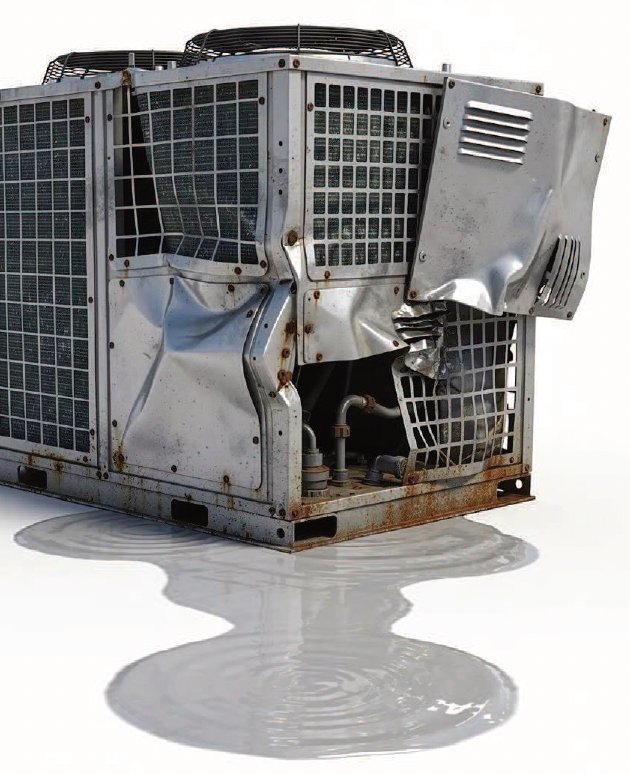
Operational disruptions are one of the most tangible consequences of deferred maintenance. When issues escalate to the point of failure, institutions are often forced into emergency repairs that interrupt academic operations and escalate costs. Emergency responses typically require premium labor rates, expedited equipment purchases, and unplanned downtime.
Although not every facility’s emergency can be prevented, strategic planning—including aligning project timelines with the academic calendar—can help mitigate avoidable disruptions.
Effective cross-department collaboration is again essential. Too often, decisions made in isolation create unanticipated financial or operational consequences for other departments. Fully vetted alternative plans and transparent communication can help to minimize downstream impacts to campus operations.
Reputational and Legal Risks
Significant deferred maintenance issues can quickly damage an institution’s reputation. Students have created public pages on social media sites where they post photos and descriptions of poor living or working conditions to “shame” their institution into action. These posts can go viral, leading to parental complaints and public backlash. Facility failures, most importantly, can lead to safety hazards, injuries, litigation, and add to the erosion of public trust.
"The backlog of capital renewal need remains over $140/gsf."1
Finally, costly failures (like a water intrusion loss) can lead to more insurance claims and higher premiums. Not properly maintained HVAC systems or roofs can result in claims not fully covered by insurance. Colleges are not typically liable for student property, which could lead to financial losses to students and families. Any of these consequences can ultimately affect student recruitment and retention, donor engagement, and potentially accreditation.
Funding the Backlog
Identifying sustainable funding for deferred maintenance is one of higher education’s most persistent challenges. Donor interest in funding backlogged repairs is rare, and budgetary flexibility is often limited.
A recent Inside Higher Ed article, “Why College Deferred Maintenance Is a Growing Concern” (August 6, 2025), highlights several potential strategies, including:
Establishing facility endowments to support buildings throughout their lifecycle
Rethinking and redesigning physical spaces
Reducing the campus footprint where feasible
None of these solutions offer a quick fix, but they underscore the need for long-term planning and disciplined financial management.
The Role of Risk Managers
Risk managers play a critical role in ensuring that deferred maintenance remains a visible, institution-wide priority. By emphasizing the financial, operational, strategic, legal, and reputational impacts, ERM leaders can help executives and boards connect the dots between infrastructure investment and the institution’s long-term success.

Deferred maintenance is not simply a facilities issue; it is a fundamental enterprise risk that influences every aspect of institutional health. Elevating this conversation and championing cross-department collaboration will be essential as institutions navigate an increasingly challenging environment.
https://www.gordian.com/uploads/2025/04/2025-State-of-Facilities-Report.20250331220235713.pdf