By Heather Salko, Esq.
Donors or high-profile alumni selected as trustees may lack understanding of institutions’ workings or trustees’ fiduciary duties. Ensuring your institution’s trustees understand their duties can help avoid costly claims stemming from their actions while also fostering a culture of responsibility and accountability.
Why it Matters.
United Educators (UE) insurance has seen claims involving trustees' actions. Consider taking these actions to help your board of trustees or its individual members avoid causing a claim or becoming a crucial component of it:
Educate them about fiduciary and institutional oversight responsibilities. Do this while vetting candidates. Stress that their duty lies with your institution and not particular administration members or those courting them for board seats.
Offer training on your policies and your state's nonprofit and fiduciary requirements. Ensure trustees understand the fundamentals of board operation and their individual legal duty to your institution. Put your policies/procedures in board orientation materials and explain the importance of following these policies/procedures. Educate all members on additional state law requirements for fiduciaries of nonprofit organizations or educational entities.
Explain enterprise risk management (ERM). ERM looks holistically at risks that your institution faces at different levels and will help trustees understand questions they should ask administrators. Topics include typical risks such as minors on campus or deferred maintenance, and also fiscal management, accreditation, and other fiduciary issues.
Outline the role that trustees play in litigation decisions. Explain the litigation process, and teach them about typical questions and interactions with counsel. Ensure they understand they may be called upon to approve significant settlements. Update them on the status of your institution's significant claims.
Consider term limits and regularly review member service duration. This will help prevent long-term power consolidation and complacency while promoting better institutional governance.

Fiduciary responsibilities
Education Corporation of America (ECA) will pay a $28 million settlement related to the sudden closure of its chain of for-profit colleges in 2018. The closures included Brightwood College, Brightwood Career Institute, and Virginia College. The plaintiffs claimed ECA breached its fiduciary duties by leaving more than 20,000 students without a degree pathway. Three former ECA officials were named in the settlement.
United Educators 2024 Large Loss Report
5 Essential Questions for Fiduciaries
Who is our financial auditor?
What are our key risks and what are we doing to strengthen our institution's financial health and compliance?
How does our insurance broker or advisor ensure that our institution's coverage is sufficient and aligned with our risk profile and regulatory requirements?
What tools does leadership provide to help the Risk Manager identify, assess, and mitigate risks?
How is our institution addressing the findings or recommendations from the Clery Report to promote campus safety and ensure federal compliance?
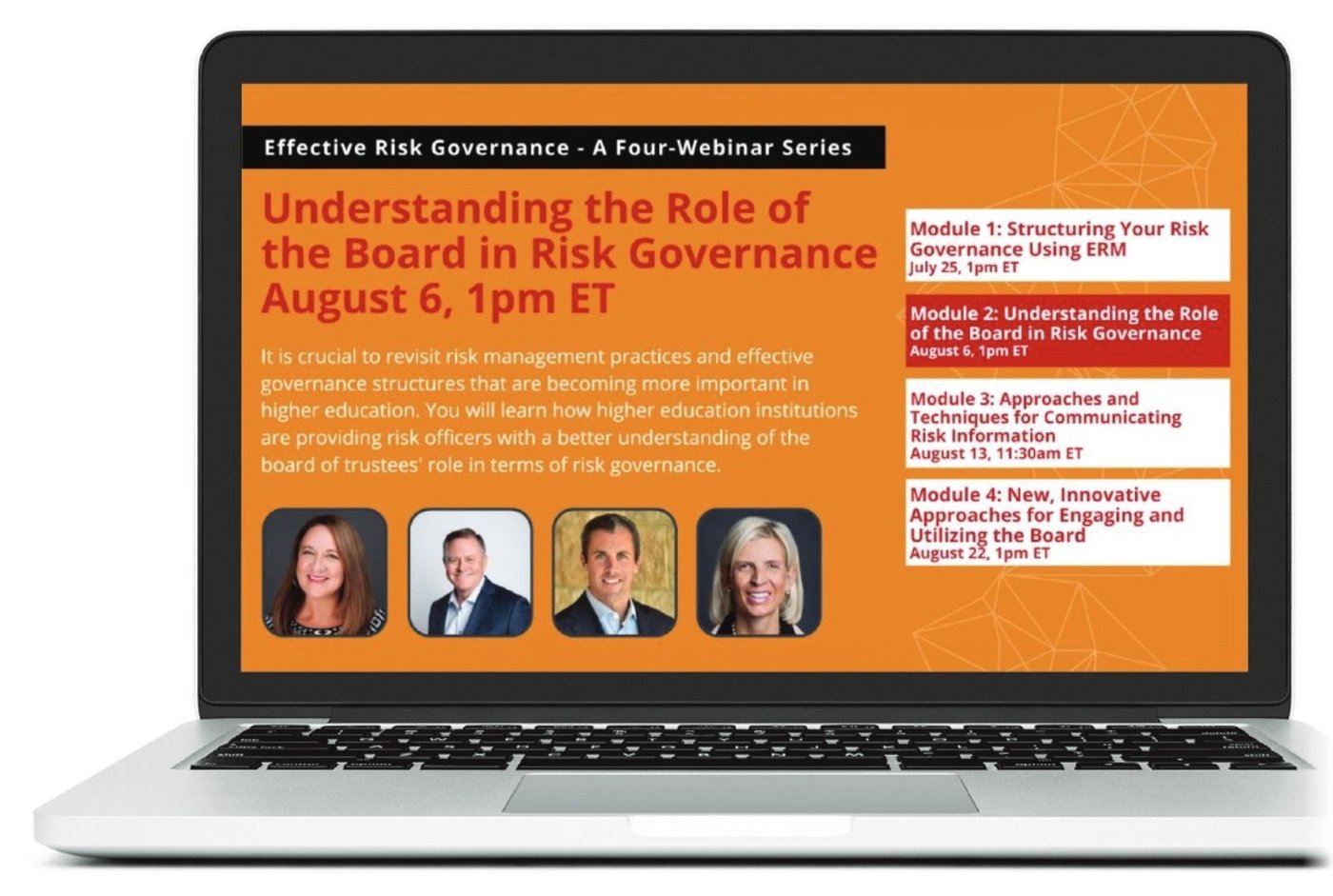
The Role of the Board in Risk Governance.
University Risk Management & Insurance Association (URMIA) and Deloitte’s Higher Education Specialty Practice hosted a four webinar sessions to provide risk officers a better understanding of the role of the board in terms of risk governance. Specifically, through a discussion of its structure, composition, roles and responsibilities, as well as a deep dive into certain committees. Speakers included Cynthia Vitters, Managing Director and former Department of Education official, Deloitte; Jacob Braunsdorf, Senior Manager, Deloitte; Susie Johnson, Director of Risk Management, Iowa State University; and John Fees, CEO, GradGuard.